
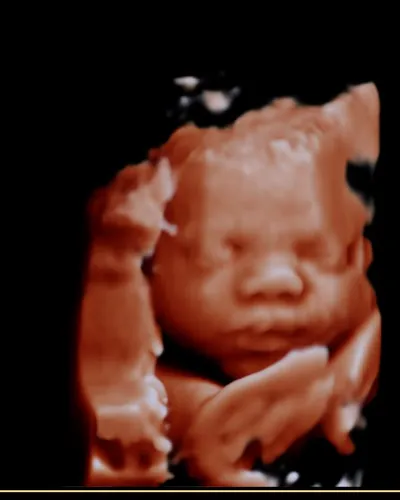

It is one of the sweetest details parents notice on a 3D or 4D scan — that tiny nose taking shape. Here is what ultrasound can show, how nose traits are inherited, and how you can turn your scan into a newborn-style keepsake preview.
Your baby's nose begins developing early — facial structures start forming in the first trimester, with the nose and nasal passages taking shape around weeks 7–10. Through the second and third trimesters, the bridge, tip, and nostrils continue refining.
By the time many families book a 3D or 4D session, the nose is often one of the most defined features on screen — which is why so many parents zoom in on it first.
On a face-forward 3D or 4D frame, the nose creates strong depth and shadow. That makes it easier to recognize than softer features like cheeks or chin — especially when your studio captures a clear, unobstructed angle.
Parents often say the nose is the feature that makes the scan feel most "real." It is also one of the features our keepsake portrait draws most directly from your uploaded images.
There is no single "nose gene." Shape is influenced by many genes from both parents — bridge height, tip definition, nostril width, and overall profile all blend together.
Upload clear face-forward 3D or 4D images and we translate the nose structure visible in your scan into a warm, newborn-style keepsake portrait. It is an artistic preview inspired by your ultrasound — not a medical forecast.
See how scan detail — especially around the nose — can inspire a lifelike keepsake portrait.
3D and 4D scans often show developing nose shape more clearly than 2D images. You can see broad structure — bridge height, tip shape, nostril width — but the final newborn nose will still refine after birth. Our keepsake portrait interprets what your scan shows into a warm newborn-style preview.
Facial features begin forming early in the first trimester. The nose and nasal passages develop through weeks 7–10, and continue refining through the second and third trimesters. By the time many parents get a 3D/4D scan, nose shape is often one of the most recognizable features on screen.
Usually both. Nose shape is influenced by many genes from each parent, so most babies inherit a blend — not an exact copy of either mom or dad. Siblings from the same parents can still end up with noticeably different noses.
On a face-forward 3D or 4D frame, the nose often creates the strongest shadow and depth on screen. That makes it one of the first features parents recognize — sometimes before ears, cheeks, or chin fully stand out.
Not exactly. Ultrasound captures developing structure in scan form; after birth, cartilage, swelling, and growth all change the look. A keepsake portrait is an artistic estimate inspired by your scan — not a medical prediction.
Yes. Upload clear face-forward ultrasound images to create a newborn-style keepsake portrait. The preview is free and watermarked; unlock the clean download to share with family.
Upload your scan images and generate a newborn-style keepsake portrait inspired by what your ultrasound already shows.
Free watermarked preview · Unlock from $9.99
Create PortraitUpload your 3D or 4D scan, preview free, then unlock a clean keepsake portrait to share with family.